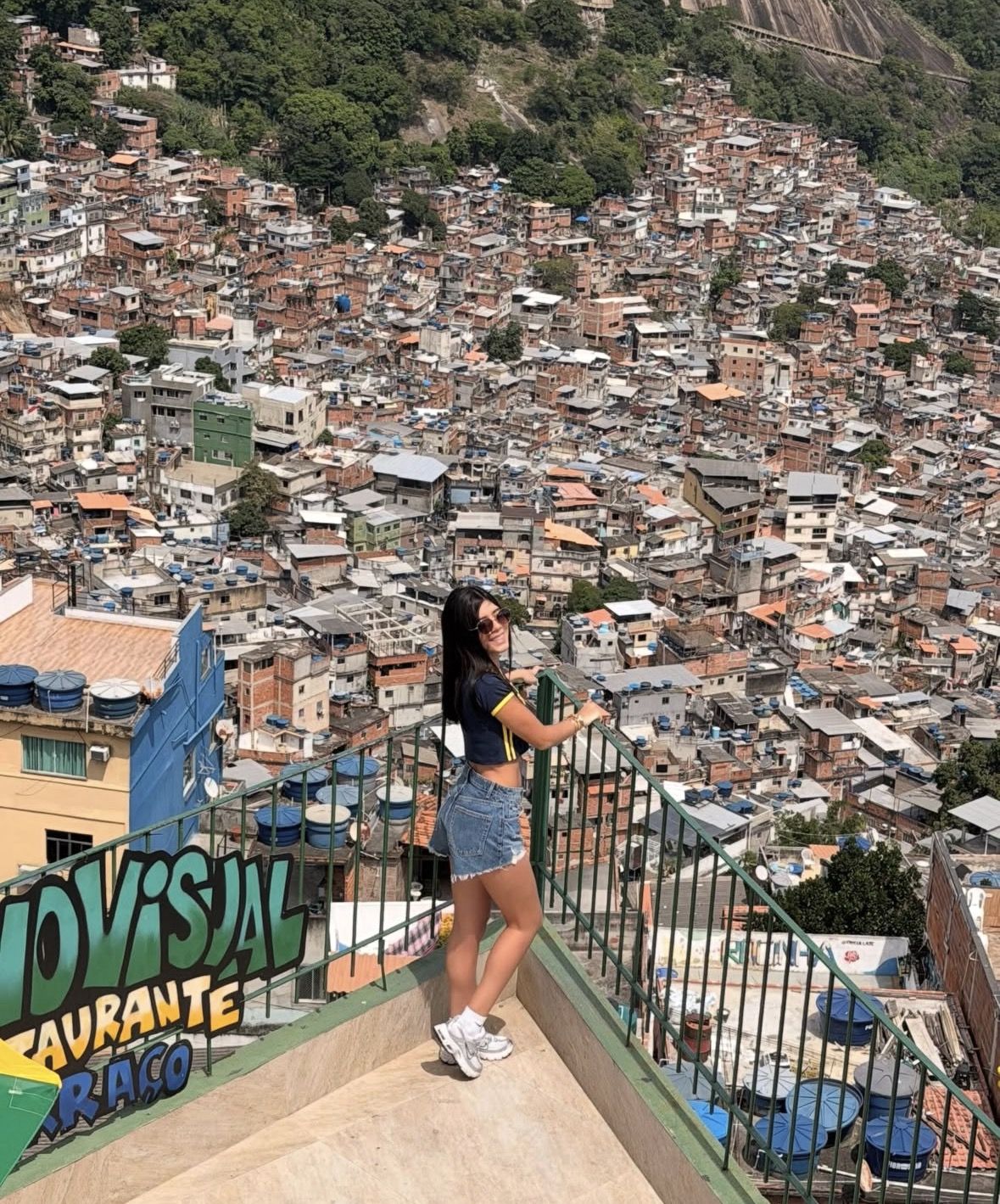
📍 Rio de Janeiro, Brazil

Rocinha Favela: Rio's Most Iconic Community

Perched dramatically between the wealthy neighbourhoods of São Conrado and Gávea, this hillside community pulses with colour, culture, and resilience. A guided visit offers one of the most authentic and eye-opening experiences in all of South America.

Discover Rio From a Completely Different Perspective

The 3 Hour Rocinha Favela Walking Tour with a Local Guide is one of the most authentic and eye-opening experiences available in Rio de Janeiro. Rocinha is the largest favela in Brazil, home to hundreds of thousands of residents who have built a complex, self-sustaining community against the backdrop of the city's famous hills. This guided walk takes you through its winding lanes in a respectful, non-intrusive way, giving you real context rather than a superficial glimpse. Your guide, a local resident, shares stories of daily life, community resilience, local businesses, and the social challenges that residents navigate every day. After the walk, your driver returns you toward Copacabana, passing the iconic beaches of Leblon and Ipanema — a beautiful contrast to round out the experience.

  • Walk through Rocinha with a guide who actually lives there
  • Gain honest insight into daily life, culture, and community challenges
  • Respectful, non-intrusive approach that supports local residents
  • Return transfer via the scenic Leblon and Ipanema beachfront
  • Drop-off as close as possible to your Copacabana hotel
Book Now
⭐ Top Rated 3 Hour Rocinha Favela Walking Tour with a Local Guide

Where Is Rocinha Favela Located?

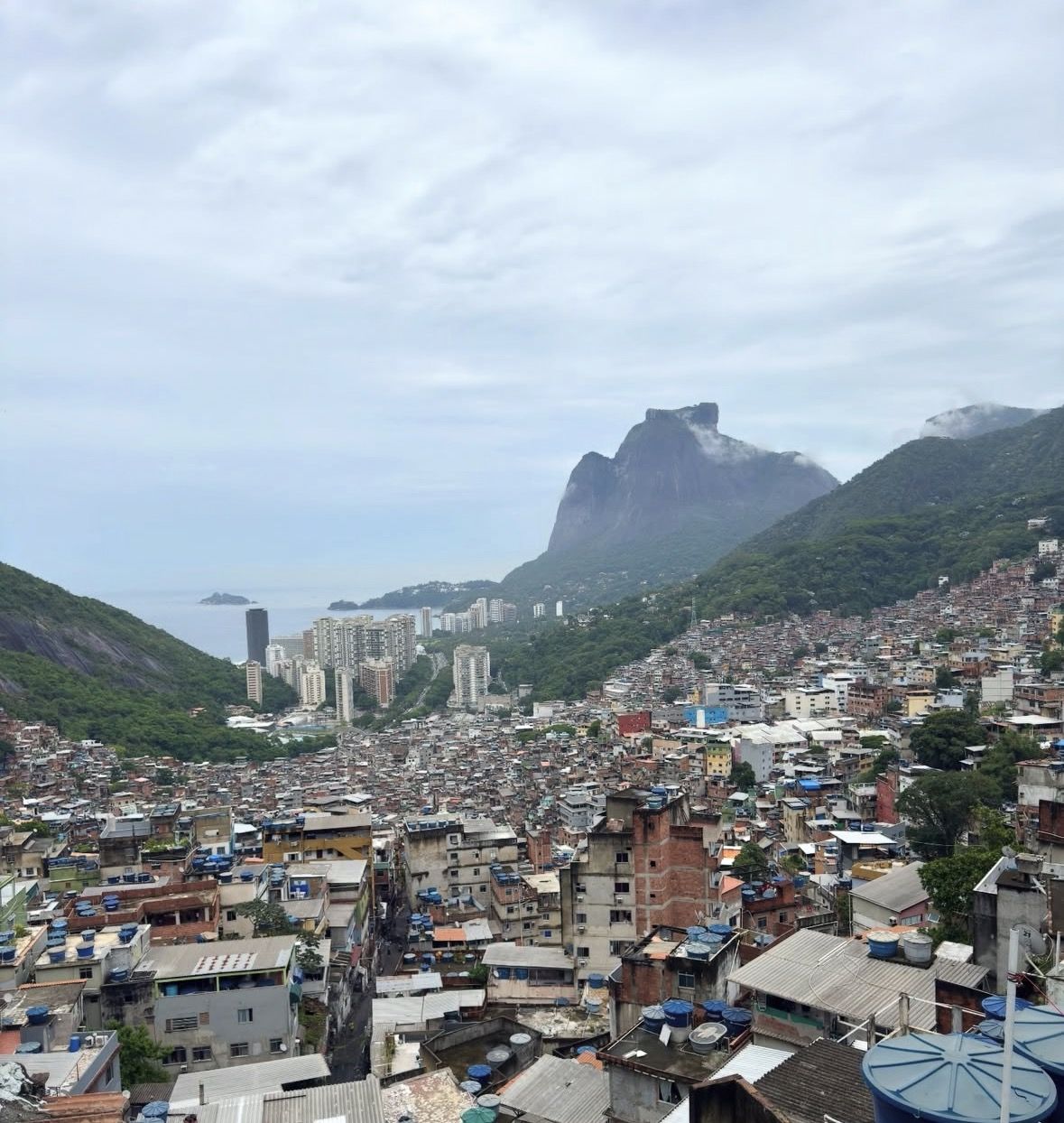
Dramatically positioned on a steep hillside in Rio's South Zone, the community sits just minutes from some of the city's most upscale addresses. That striking geographical contrast — dense informal housing pressing against affluent Gávea and luxurious São Conrado — makes it one of the most visually arresting urban landscapes on earth.

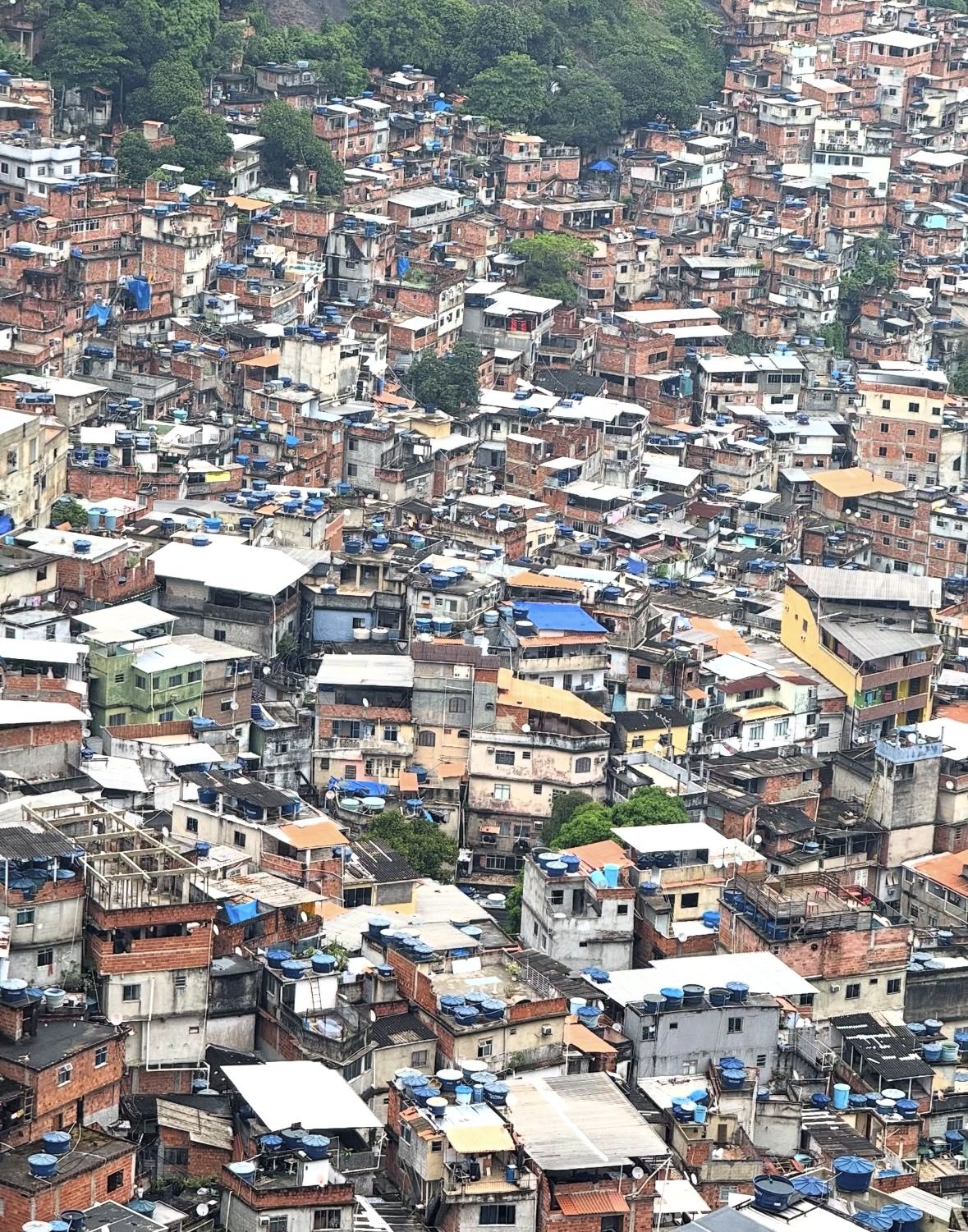
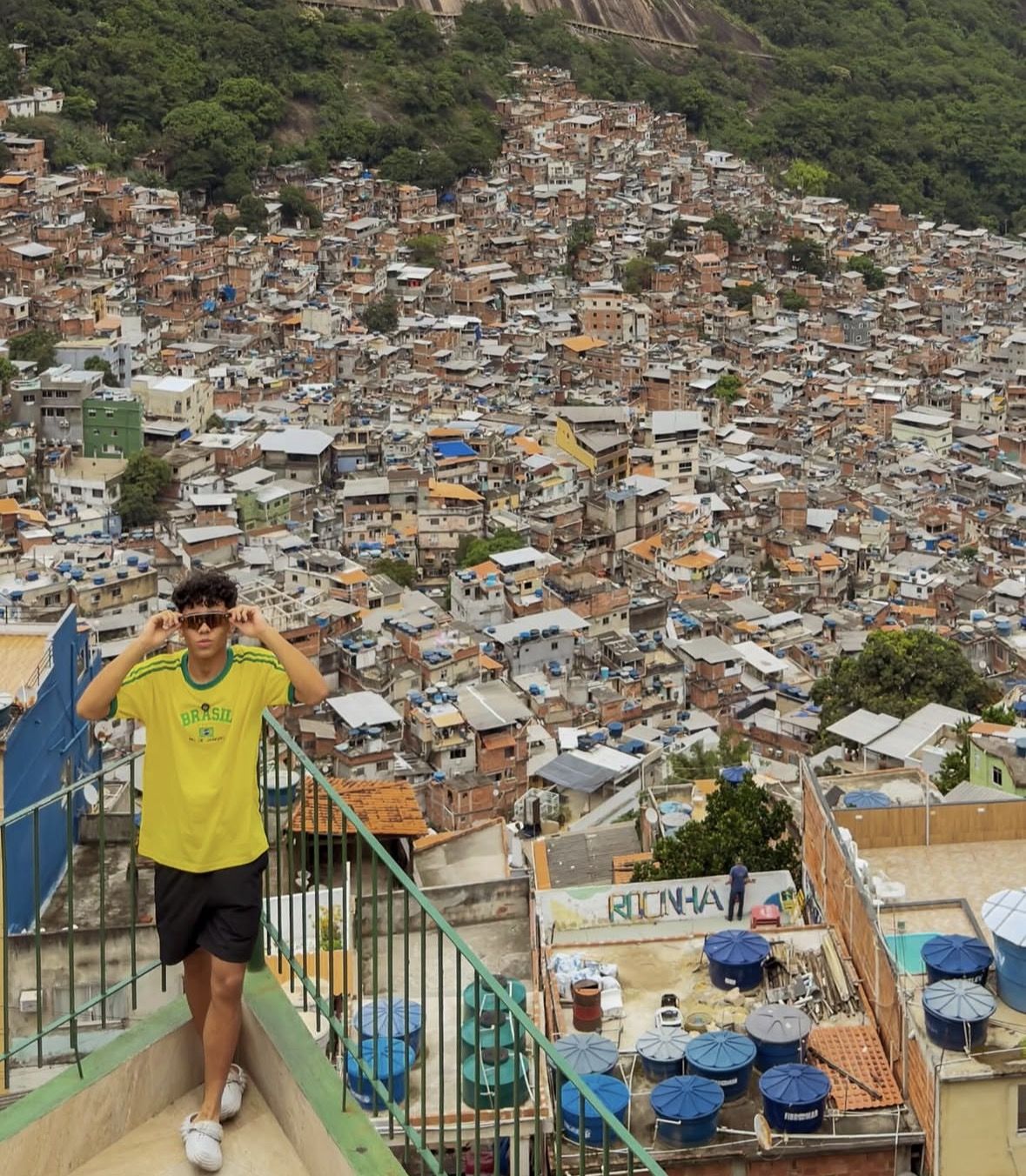
Rocinha Favela occupies a hillside in Rio de Janeiro's South Zone, wedged between the upmarket neighbourhoods of Gávea and São Conrado, with Pedra Dois Irmãos — the iconic twin-peaked mountain — looming overhead. The community cascades down the slope in a dense patchwork of self-built brick houses, many rising four to eleven storeys. Tunnels and expressways connect it to the broader city, yet its internal geography is a world unto itself: a labyrinth of steep lanes, staircases, and covered passages that only locals navigate with ease.

The settlement began taking shape in the early 1930s when rural migrants, many fleeing drought and poverty in Brazil's Northeast, began erecting simple shelters on what had been plantation land. The name 'Rocinha' — meaning 'small farm' in Portuguese — is a relic of that agricultural past. Decades of internal migration swelled the population throughout the mid-twentieth century, creating a self-sufficient urban village long before formal city planning acknowledged its existence. Today it stands as a testament to how communities can organise, build, and thrive despite institutional neglect.

Visitors who arrive with an open mind consistently describe the experience as transformative. The community hums with commerce — barbershops, bakeries, electronics stalls, and samba schools line the main avenue — and residents take genuine pride in showing that life here is far richer than headlines suggest. Guided tours typically last two to three hours, moving between viewpoints, cultural projects, and street-food stops. The warmth of local hospitality, combined with the dramatic hillside scenery and energetic street culture, leaves most travellers with a perspective on Rio they simply could not have gained elsewhere.
👥
Estimated Population 100,000–200,000
📐
Area ~0.86 km²
🏙️
Location South Zone, Rio de Janeiro
📅
Founded (approx.) Early 1930s
🏠
Housing Density One of world's highest
🗺️
Nearest Landmark Pedra Dois Irmãos
🌎
#1
Largest Favela in Latin America

By most estimates, this community is the largest single favela in Latin America, home to well over 100,000 residents despite an official census figure closer to 72,000. The density of multi-storey self-built housing makes accurate counting extremely difficult.

🏗️
11
Storeys in Some Buildings

With almost no horizontal space left to expand, residents began building upward, erecting informal structures of up to eleven storeys. These self-constructed towers create a dramatic vertical skyline visible from the beaches of São Conrado below.

🎨
100+
Street Murals & Art Installations

Local and international artists have transformed retaining walls and building facades into a sprawling open-air gallery. The street art reflects community pride, political commentary, and pure creative expression in equal measure.

📺
2010
Year of UPP Pacification

Rio's government installed a Pacification Police Unit (UPP) here in 2010, aiming to reduce drug-gang dominance and expand state services. The programme had mixed long-term results but marked a significant shift in how the city approached favela security.

🚐
30 min
From Ipanema by Car

Despite feeling like a world apart, the community is surprisingly close to Rio's famous beachside neighbourhoods. A taxi or rideshare from Ipanema or Copacabana takes roughly twenty to thirty minutes, depending on traffic.

🎵
1960s
Birthplace of Local Funk Culture

Baile funk — the bass-heavy electronic genre that became Rio's defining urban soundtrack — has deep roots in communities like this one. Weekend baile funk parties remain a cornerstone of social life and cultural identity for younger residents.

🚶

Resident-Led Walking Tours

Local guides lead small groups through the main avenue and deeper alleyways, sharing personal stories about daily life, history, and community projects. These two-to-three-hour walks are the most popular way to visit responsibly and ensure tourism revenue stays within the community.

🏍️

Motorbike Taxi Rides

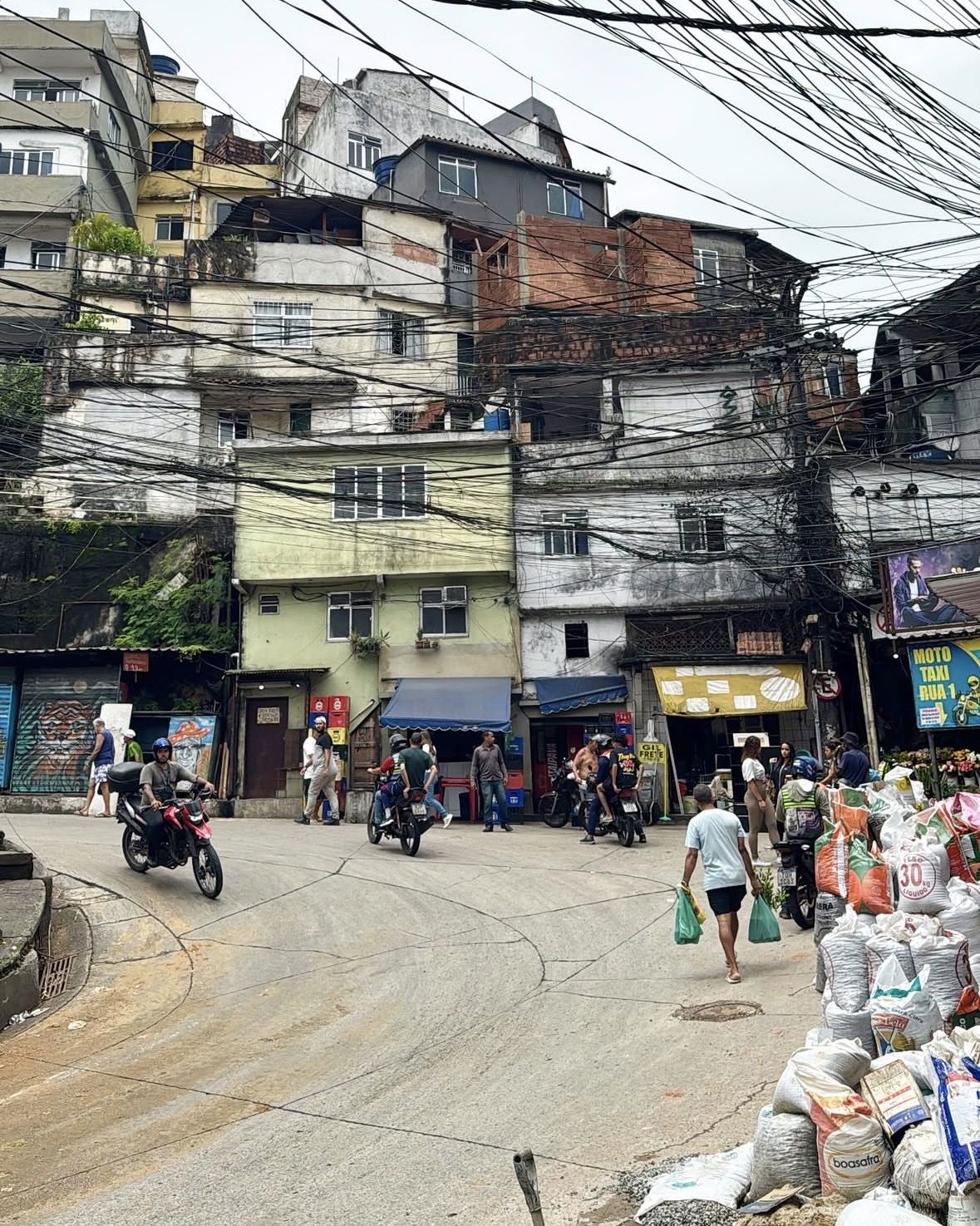
Mototaxis are the primary local transport, weaving through lanes too narrow for cars. Many tour operators offer a thrilling mototaxi segment as part of their itinerary, giving visitors a genuine taste of how residents move around the hillside every day.

🎨

Street Art & Mural Exploration

Walls throughout the community are covered in bold murals by local and visiting artists. A self-guided or guided art walk reveals layers of meaning — political, spiritual, and celebratory — in works that rival any formal gallery in Rio.

🍽️

Local Food & Market Tasting

The main street is lined with vendors selling pão de queijo, açaí bowls, grilled meats, and fresh juice. Stopping to eat alongside residents at a local boteco (neighbourhood bar) is one of the most authentic Rio experiences available to any visitor.

🌄

Hillside Viewpoint Visits

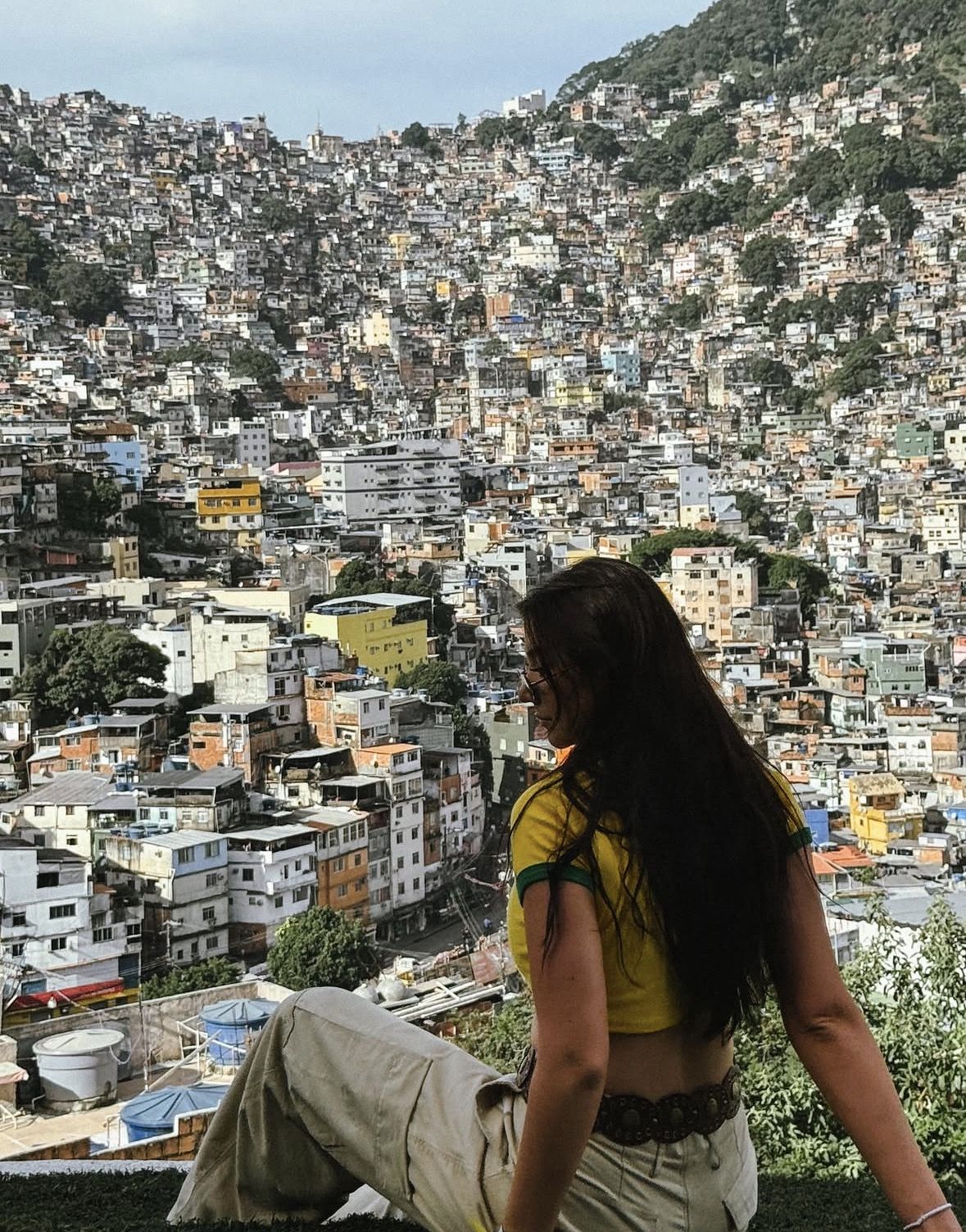
Upper terraces offer sweeping panoramas across São Conrado beach, Barra da Tijuca, and the sparkling Atlantic. The views from the top of the community rival those from any official lookout in the city and are far less crowded.

🏫

Community Project Visits

Several social enterprises and NGOs operating here welcome visitors, including after-school art programmes, capoeira academies, and recycling cooperatives. These stops add meaningful depth to any tour and allow travellers to connect directly with community-led development efforts.

How Rocinha Favela Compares to Similar Destinations

Weighing up Rio's urban experiences? Here's how this community stacks up against other immersive neighbourhood visits in the city and beyond.

Travellers seeking authentic urban culture in Rio often find themselves choosing between several distinctive neighbourhood experiences. Rocinha Favela offers something genuinely unique — a living, breathing city-within-a-city with its own economy, culture, and identity — but how does it compare to other favela tours, historic districts, or community-based tourism destinations? This table helps you match the right experience to your interests, budget, and appetite for adventure.

CrowdsPriceBest ForWhat Sets It Apart
★ Rocinha FavelaModerate — tours keep groups smallBudget-friendly (R$60–R$150)Cultural immersion & urban explorationLatin America's largest favela; stunning hillside views; resident-led tours
Vidigal Favela, RioLow — less touristyBudget (R$40–R$100)Bohemian vibe & sunset viewsQuieter, artsy community; rooftop bars with iconic vistas; more relaxed atmosphere
Santa Teresa, RioModerateLow-moderate (free to explore)Art, history & colonial architectureBohemian hilltop neighbourhood; tram rides; galleries and studios; safer, more formalised
Villa 31, Buenos AiresLow — emerging tourismVery budget (ARS-based)Comparative urban poverty studiesArgentina's most prominent informal settlement; ongoing government integration project; less developed tourism infrastructure

Each of these destinations offers a genuine window into urban community life, but none matches the sheer scale, density, and cultural energy on offer here. Rocinha Favela's combination of resident-led storytelling, dramatic geography, and a fully self-contained internal economy makes it the most comprehensive favela experience in South America — ideal for travellers who want depth rather than a surface-level glimpse.

Rocinha Favela Everything You Need to Know

Everything you need to plan a safe, respectful, and memorable visit to one of Rio's most extraordinary communities.

How to Get to Rocinha Favela

The community sits in Rio de Janeiro's South Zone, making it easily accessible from the city's main tourist hubs. From Ipanema or Copacabana, a rideshare app (99, Uber) or metered taxi takes twenty to thirty minutes and costs roughly R$25–R$50. Most visitors arrive by taxi or as part of a guided tour that includes pick-up from their accommodation. There are no direct metro connections, but the location between two major expressways means road access is straightforward.

Once inside, navigation relies entirely on local knowledge. The main artery — Estrada da Gávea — is accessible by car and runs through the heart of the community. From there, mototaxis and on-foot exploration are the only practical options for reaching the upper hillside. Visitors on guided tours will be led by their local guide throughout; independent travellers should stick to the main street or hire a recommended local guide before venturing deeper into the lanes.

  • Rideshare apps (Uber, 99) are the easiest option from Ipanema, Copacabana, or Leblon
  • Metered yellow taxis are reliable; agree on the destination clearly before departing
  • Bus lines 583 and 595 run from Botafogo and pass the main entrance — cheapest option
  • Many tour operators offer hotel pick-up in air-conditioned vehicles included in the tour price
  • Driving your own rental car is possible but parking inside is extremely limited
  • Mototaxis are the main internal transport — use only recommended operators from your guide
  • The nearest major access point is Auto Estrada Lagoa-Barra; ask your driver for the Rocinha entrance
Aerial view of Rocinha Favela showing the main road and hillside houses above São Conrado

Best Time of Year to Visit

Rio de Janeiro has a tropical climate, so any month can work for a visit, but the shoulder seasons — April to June and August to October — offer the most comfortable conditions. Temperatures are warm (22–28°C) without the intense heat and humidity of summer, and rainfall is lower. Carnival season (February/March) brings extraordinary energy to the entire city, and the community celebrates with its own local festivities that parallel the famous Sambódromo parades.

Rio's summer (December to March) is hot, humid, and prone to heavy afternoon downpours, which can make steep hillside walking slippery and uncomfortable. Winter (June to September) is milder and drier — arguably the most pleasant time for walking tours. Funk baile parties typically peak on weekend nights year-round. Avoid visiting immediately after heavy rainfall, as landslide risk increases on the steeper slopes.

  • April–June: Mild, dry, and ideal for walking tours — best overall window for visitors
  • July–August: Winter brings cool evenings (18–22°C) and reliable clear skies for hillside views
  • September–October: Warm shoulder season with low rainfall and comfortable humidity levels
  • November: Transition month — pleasant but watch for the start of the rainy season
  • December–February: Peak summer heat and humidity; afternoon storms are common and heavy
  • February–March: Carnival season brings exceptional energy but also peak crowds across Rio
  • Avoid visiting on days following intense rainfall — landslide risk on steep sections is real
Clear sunny morning view over Rocinha's hillside houses toward São Conrado beach in Rio de Janeiro

What to Pack for Your Visit

Packing light and practically is essential for navigating narrow lanes and steep inclines. Leave valuables — expensive jewellery, large cameras, multiple credit cards — at your hotel. A compact mirrorless camera or your smartphone is more than sufficient for photography. Comfortable footwear is the single most important item; the uneven cobblestones and staircases demand shoes with grip. Carry only the cash you intend to spend, plus a small amount extra for food and tips.

Dress for Rio's tropical climate: lightweight, breathable fabrics work best. A light rain jacket or packable poncho is wise during summer months or the shoulder season. Sun protection is essential — the hillside offers little shade on the upper slopes. A small daypack or crossbody bag keeps your hands free for navigating stairs and narrow passages. Bring a reusable water bottle; local vendors sell cold water and fresh juice affordably, but starting hydrated matters in the heat.

  • Sturdy closed-toe shoes or trail-style trainers with good grip for steep, uneven lanes
  • Lightweight, breathable clothing appropriate for tropical warmth and humidity
  • Packable rain poncho or compact umbrella for afternoon downpours in summer months
  • High-SPF sunscreen and a hat — upper slopes are exposed to strong Rio sun
  • Small crossbody or daypack — keep hands free and valuables close but minimal
  • Cash in small denominations (R$ notes) — most vendors and guides do not accept cards
  • Reusable water bottle — stay hydrated, especially on warm-weather walking tours
  • Fully charged phone with an offline map downloaded (Google Maps works offline in Rio)
Traveller wearing comfortable shoes and a small backpack walking through a colourful favela alleyway in Rio

Local Tips & Cultural Etiquette

Residents of this community take enormous pride in their home, and respectful behaviour is both expected and appreciated. Always ask permission before photographing individuals, especially children. Engage with locals through your guide rather than wandering independently into private spaces. Tipping your guide generously — typically R$30–R$50 above the tour price — is customary and meaningful. Learn a few words of Portuguese; even a simple 'obrigado' (thank you) opens doors and earns instant goodwill.

Local commerce thrives on small purchases — buy a coffee, grab a pastel, or pick up a piece of locally made art. These transactions directly support families far more meaningfully than donation boxes. Avoid discussing drug trafficking, crime, or poverty in insensitive ways; the community is defined by its culture, not its challenges. Carry only small-denomination cash. Eat where locals eat — the food is inexpensive, delicious, and far safer than the sensationalist reputation of favela dining might suggest.

  • Always visit with a resident-led guide — it's safer, more ethical, and far more insightful
  • Ask permission before photographing people, especially children and elderly residents
  • Tip your local guide generously — a significant portion of tour income sustains community projects
  • Learn a few basic Portuguese phrases; residents respond warmly to any effort at the language
  • Buy food, drink, and crafts from local vendors to keep tourism revenue circulating internally
  • Avoid discussing crime or poverty in a sensational way — lead with curiosity and respect
  • Do not wander away from your guide into unfamiliar residential lanes, especially on a first visit
Local resident and tourist sharing a conversation at a street food stall inside a Rio de Janeiro favela

Health & Safety Advice for Visitors

Rio de Janeiro requires standard tropical travel vaccinations: hepatitis A, typhoid, and a routine tetanus update are all recommended by most travel health clinics. Yellow fever vaccination is advised for travellers visiting other parts of Brazil, though Rio itself is considered low risk. Dengue fever is present in the city, particularly during the rainy season; use DEET-based insect repellent on exposed skin. Pack any prescription medications in adequate supply, as specialist pharmacies inside the community are limited.

Visitor safety improves significantly when you travel with an established, resident-led tour operator — this is not a situation where independent solo exploration is advisable on a first visit. Avoid flashing expensive electronics or jewellery. If you encounter any tense or unusual situation, follow your guide's instructions immediately and calmly. Emergency numbers in Brazil: police 190, ambulance 192, fire 193. The nearest major hospital is Hospital São Lucas in Gávea, approximately ten minutes by car from the main entrance.

  • Consult a travel health clinic 4–6 weeks before departure for recommended vaccinations
  • Apply DEET-based insect repellent — dengue is present in Rio, especially November to April
  • Always book with a reputable resident-led tour operator — do not explore the upper lanes solo
  • Leave expensive jewellery, watches, and large cameras at your hotel before visiting
  • Emergency numbers: Police 190 | Ambulance 192 | Fire Brigade 193
  • Nearest hospital: Hospital São Lucas, Gávea — approximately 10 minutes by car
  • Stay hydrated and pace yourself on steep climbs, especially in summer heat above 30°C
First aid kit and travel health essentials laid out before a trip to Rio de Janeiro

All Tours

Round out your Rio de Janeiro trip with these remarkable nearby attractions, each within easy reach of the community.

Rocinha Favela What Visitors Are Saying

Real traveler experiences from Rocinha Favela — honest reviews from visitors around the world.

★★★★★

"Taking a guided walking tour through the community was one of the most eye-opening experiences of my entire trip to Rio. Our guide, a lifelong resident, shared the real history and daily life of the neighborhood with warmth and pride. We visited a local school, sampled street food, and watched artisans at work — it felt nothing like the stereotype I had in my head. I left with a completely new understanding of resilience, creativity, and community spirit."

MS
Marta S.March 2025
★★★★★

"I was nervous before visiting, but my guide immediately put me at ease and explained the etiquette respectfully. The maze of narrow alleys, vibrant murals, and bustling mini-markets were absolutely fascinating to navigate. We stopped at a rooftop with a breathtaking panoramic view over São Conrado and the ocean — honestly one of the best views in all of Rio. I would strongly recommend booking through a community-based tour operator so your money goes directly to local families."

JO
James O.January 2025
★★★★☆

"The tour was genuinely informative and our guide was knowledgeable about everything from the history of migration from Brazil's Northeast to the current community initiatives. I appreciated that the experience felt educational rather than voyeuristic. The only reason I'm giving four stars is that the group was slightly larger than I'd have liked — a smaller group would make it more personal. That said, I'd still recommend it to anyone curious about the real social fabric of Rio de Janeiro."

PN
Priya N.February 2025
★★★★★

"This was hands-down the highlight of my two weeks in Brazil. The energy inside the community is electric — funk music drifting from open windows, kids playing football in tiny squares, vendors calling out from their stalls. Our local guide was passionate about dispelling myths and showing us the genuine achievements of the residents. I bought a piece of original street art from a local artist and it now hangs proudly in my living room."

ST
Sofia T.April 2025
★★★★★

"As a sociology student, I found this tour invaluable for understanding urban inequality in a visceral, human way. The guide walked us through the informal economy, pointing out everything from micro-businesses to community health clinics set up by residents themselves. The contrast between this densely packed hillside community and the luxury condos just meters away in Gávea is something no textbook can fully convey. I'm already planning to return with my university group next year."

LM
Luca M.May 2025
★★★★☆

"A thought-provoking and memorable afternoon that I'd recommend to any culturally curious traveler. The community is far more organized and self-sufficient than outsiders might expect, with its own postal system, commerce, and social networks. Our guide was candid about the challenges residents face, including access to formal infrastructure and security concerns, which I respected for its honesty. Wear comfortable shoes — the steep hillside paths are a serious workout!"

AR
Aiko R.June 2025
★★★★★

"I traveled solo to Rio and joining a small-group tour here was the best decision I made. The guide introduced us to a capoeira instructor, a community activist, and a woman who runs a thriving clothing business from her home — real stories that stay with you long after you leave. The famous mototaxi ride up the hill is an adventure in itself and gives you a sense of the sheer scale of the place. I came away humbled and inspired."

EV
Elena V.July 2025
★★★★★

"We visited as a family and I was initially uncertain whether it was appropriate to bring our teenagers, but it turned out to be the most valuable cultural experience of our holiday. The guide tailored the commentary to different ages and encouraged our kids to ask questions freely. Seeing the community garden, the art school, and the incredible city views gave our children a global perspective they simply couldn't get from a museum. We left feeling grateful, inspired, and deeply respectful of the people who call this place home."

DK
David K.August 2025

Watch Rocinha Come to Life

See the hillside streets, panoramic views, and vibrant daily life of this extraordinary community through the eyes of those who know it best.

YouTube video thumbnail showing aerial view of Rocinha Favela and Rio de Janeiro skyline

Find Rocinha Favela

The community is located on the hillside between Gávea and São Conrado in the South Zone of Rio de Janeiro, Brazil, with its main entrance on Estrada da Gávea.

Rocinha Favela Frequently Asked Questions

Everything you need to know before visiting — practical answers to the most common questions travelers ask.

Visiting with a reputable, community-based guided tour is considered the safest and most respectful approach. Experienced local guides know current conditions, understand which areas are accessible, and can navigate the community confidently. Independent wandering without local knowledge is not recommended, as the layout is complex and the security situation can change. Always check current travel advisories and follow your guide's instructions throughout the visit.
The community is located in Rio's South Zone, nestled between the upscale neighborhoods of São Conrado and Gávea, easily reachable in 20–40 minutes from Ipanema or Copacabana. Most visitors take an Uber or taxi to the main entrance on Estrada da Gávea, and many tours include transport from a central meeting point. The famous mototaxis (motorcycle taxis) are the fastest way to reach the upper sections once you're inside. Public buses also connect the area, but for a first visit, joining an organized tour simplifies logistics considerably.
Most standard walking tours run between two and three hours, covering key points of interest such as viewpoints, local markets, community projects, and street art. More in-depth cultural or photography tours can last four to five hours or even a full day. The duration often depends on your guide and the specific route, so check the details when booking. Arrive comfortable and hydrated, especially if you're visiting during Rio's hot summer months.
Prices typically range from R$80 to R$250 per person (roughly US$15–50) depending on group size, tour length, and whether transport is included. Community-run and resident-guided tours are widely available and are generally considered the most authentic and ethically sound option. Some tours include a meal or snack at a local eatery, which is a wonderful way to support small businesses in the community. Always confirm what is included before booking so there are no surprises on the day.
Comfortable, closed-toe shoes are essential — the steep, uneven pathways through the community can be slippery, especially after rain. Dress casually and modestly; avoid flashy jewelry or expensive accessories that might attract unwanted attention. Bring a small amount of cash in Brazilian reais for snacks, souvenirs, or tips for your guide, as card payments are not always accepted. Sunscreen, a hat, and a refillable water bottle are strongly recommended for daytime visits.
Photography is generally welcomed in common areas, market stalls, and at street art installations, but always ask permission before photographing individuals, especially children. Responsible tour operators will brief you on photography etiquette before the tour begins, and it's important to follow their guidance. Think of it the same way you would in any residential neighborhood — people live and work here and deserve to be treated with dignity. Purchasing artwork or crafts from local artists is a great way to support the community while taking home a meaningful memento.
Official census data puts the population at around 72,000 residents, but many local organizations and researchers estimate the true figure is between 100,000 and 250,000 people, given the density of informal housing and the difficulty of counting in such a complex urban environment. It is widely regarded as one of the largest favelas in Brazil and in all of South America. The community covers a steep hillside of roughly 1.8 square kilometers, with housing rising up to 11 stories in some areas. Its sheer scale is one of the things that surprises most first-time visitors.
Visitors typically explore the bustling main street lined with shops, pharmacies, and restaurants, as well as winding alleyways decorated with vivid street art. You'll likely visit a viewpoint offering stunning vistas across São Conrado beach and the Atlantic, and possibly meet local artisans, educators, or community activists. Many tours stop at community-run projects such as art schools, sports programs, or health clinics that residents have built largely through self-organization. The sensory experience — the sounds of funk and baile funk music, the aromas of street food, the energy of daily life — is unlike anything else in Rio.
Rio's dry season, from May to September, is generally the most comfortable time for walking tours, with lower humidity and cooler temperatures. The summer months of December through February are very hot and wet, which can make steep hillside paths more challenging, though the energy during Carnival season (February–March) is extraordinary. Avoid visiting immediately before or after major security incidents — always check current local news and tour operator updates. Morning tours tend to be cooler and the light is excellent for photography.
The single most impactful choice is to book your tour through a community-based operator led by local residents, ensuring your money stays within the neighborhood. Eat at local restaurants or buy snacks from street vendors during your visit rather than bringing everything from outside. Purchase crafts, artwork, or clothing directly from resident artisans rather than from external souvenir shops. Tipping your guide generously and spreading the word about ethical community tourism when you return home are both meaningful ways to contribute to the long-term wellbeing of the people who live there.

Ready to experience the real Rio for yourself?

Book Your Tour

The History of Rocinha: From Farm to Megafavela

What began as a few simple shelters on an old plantation in the 1930s grew — through waves of migration, ingenuity, and collective self-organisation — into one of the most remarkable urban communities on the planet. Understanding that century-long journey transforms a visit from a curiosity into a profound human story.

📅 Book Now